
Islamic vs. Conventional Mortgages: Understanding Sharia-Compliant Finance in the UAE
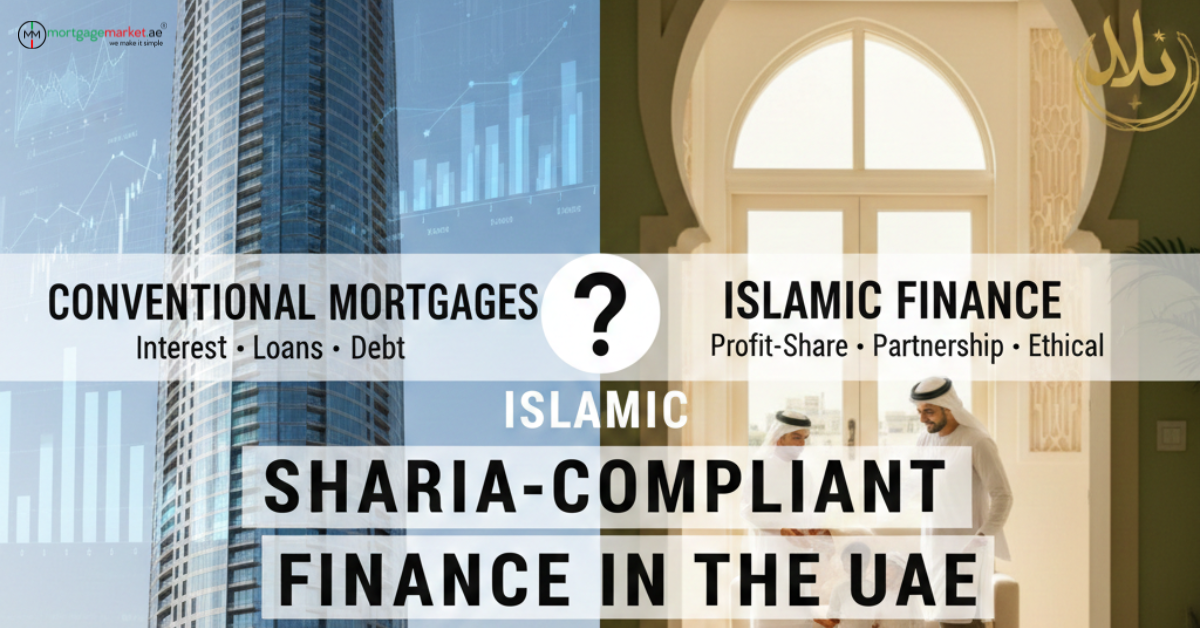
Choosing the right mortgage is one of the most important steps when buying property in the UAE. Buyers can choose between Islamic mortgages, which are fully Sharia-compliant, and conventional mortgages that charge interest. Each option has its own structure, cost implications, and eligibility requirements. Understanding these differences helps residents and expats make informed decisions when financing property in Dubai, Abu Dhabi, and across the UAE.
The UAE property market offers a unique financial landscape where buyers can choose between Islamic home finance and conventional mortgage loans. Both options are widely available, fully regulated by the Central Bank of the UAE, and designed to meet the diverse needs of residents, expatriates, and investors.
Understanding the differences between Islamic and conventional mortgages is crucial. While conventional loans focus purely on financial returns and interest payments, Islamic mortgages adhere to Sharia principles, which prohibit interest (riba) and enforce ethical, transparent transactions.
For many buyers, the choice is not only financial but also ethical or religious. For others, it revolves around long-term affordability, risk management, and flexibility.
Understanding Conventional Mortgages in the UAE
A conventional mortgage, also called a standard home loan, is the most common type of mortgage in the UAE. Under this structure, the bank lends money to the buyer to purchase a property. The borrower repays the loan in monthly instalments, which include both principal and interest.
Unlike Islamic mortgages, conventional home loans rely on interest-based repayment, and the total amount payable can vary depending on market interest rates. Conventional mortgages are widely preferred for their familiarity, straightforward application process, and flexibility.
How Conventional Mortgages Work
In practice, a conventional mortgage works as follows:
-
Loan Approval: Banks assess your income, credit profile, and existing financial commitments to determine eligibility.
-
Property Purchase: The bank disburses the loan amount, usually covering 70–85% of the property’s value depending on Central Bank guidelines.
-
Lien Registration: The property is registered in the buyer’s name, while the bank holds a lien until the mortgage is fully repaid.
-
Monthly Repayments: Borrowers pay a combination of principal and interest. Depending on the agreement, interest can be fixed for the first few years or variable, linked to benchmarks like EIBOR (Emirates Interbank Offered Rate).
-
Additional Costs: Buyers may also pay valuation fees, mortgage registration fees, insurance premiums, and potentially early settlement penalties if they repay the mortgage ahead of schedule.
Example: If you take a AED 1,500,000 mortgage in Dubai, your monthly instalments will vary depending on whether you choose a fixed or variable rate, the tenure, and the bank’s offered interest rate. Over a 25-year term, even a small difference in interest rate can translate to hundreds of thousands of dirhams in total repayment.
Why Buyers Choose Conventional Mortgages
-
Familiarity: Most buyers, including expatriates, are accustomed to conventional loans globally.
-
Refinancing Options: Conventional mortgages often allow you to refinance or switch banks to take advantage of lower rates.
-
Predictable Short-Term Costs: Fixed-rate options can provide stability for the initial period.
Consideration: Conventional mortgages may expose buyers to interest rate fluctuations, which can significantly increase monthly payments over time. For example, if variable rates rise due to economic changes, borrowers may find themselves paying far more than initially budgeted.
Islamic Mortgages: Sharia-Compliant Home Finance
An Islamic mortgage (Sharia-compliant home finance) is a fundamentally different approach to property financing. Instead of charging interest, Islamic banks earn profit through trade-based or partnership contracts, all governed by Islamic law.
Islamic finance prohibits:
-
Riba (interest)
-
Gharar (excessive uncertainty or ambiguity)
-
Speculation (investing in assets purely for profit without tangible benefit)
In the UAE, Islamic mortgages are structured to ensure ethical, transparent, and asset-backed financing. Sharia-compliant home loans are offered by both fully Islamic banks and conventional banks with dedicated Islamic finance divisions.
Why Islamic Mortgages Are Popular
-
Religious Compliance: Many UAE residents and expatriates prefer Sharia-compliant finance to adhere to personal or religious beliefs.
-
Predictable Payments: Profit rates in Islamic mortgages are typically fixed or structured, offering clear long-term budgeting.
-
Ethical Finance: Payments are tied to tangible assets, not speculative interest.
Example: If a buyer in Abu Dhabi chooses an Islamic mortgage under the Murabaha model, the total cost of the property, including the bank’s profit, is agreed upon upfront. This eliminates the uncertainty of variable interest, giving the buyer certainty over monthly obligations.
Types of Islamic Mortgage Structures in the UAE
Islamic mortgages come in several forms. Understanding these structures is key to deciding which product aligns with your financial goals and lifestyle.
Murabaha (Cost-Plus Sale)
-
How it works: The bank purchases the property and resells it to the buyer at a pre-agreed profit margin.
-
Payment Structure: Monthly payments are fixed and include the bank’s profit.
-
Ownership: Transferred immediately but with the bank’s financial interest until payments are completed.
Advantages:
-
Clear, upfront cost with no hidden fees
-
Simple for buyers new to Islamic finance
Example: If a Dubai property costs AED 2,000,000, the bank buys it and resells it for AED 2,200,000. You pay this over 20 years in fixed monthly instalments.
Ijara (Lease-to-Own)
-
How it works: The bank buys the property and leases it to the buyer. Ownership transfers at the end of the term.
-
Payment Structure: Monthly payments include rental fees and equity contributions toward ownership.
-
Ownership: Gradually transfers over the financing period.
Advantages:
-
Flexibility in structuring lease and ownership periods
-
Sharia-compliant alternative to conventional mortgages
Example: If you lease a property for 15 years under Ijara, your monthly payments gradually reduce the bank’s ownership stake while covering rent. After 15 years, you own the property outright.
Diminishing Musharakah (Joint Ownership Model)
-
How it works: You and the bank purchase the property together. Over time, you buy the bank’s share in the property, eventually holding full ownership.
-
Payment Structure: Monthly payments decrease the bank’s ownership stake gradually.
-
Ownership: Shared initially, moving to full buyer ownership over time.
Advantages:
-
Shared risk between the bank and the buyer
-
Payment schedules decrease over time as ownership increases
Example: For a property valued at AED 3,000,000, you initially own 30%, and the bank 70%. As you make monthly payments, the bank’s share diminishes until you fully own the property.
Key Differences Between Islamic and Conventional Mortgages
|
Feature |
Conventional Mortgage |
Islamic Mortgage |
|
Interest vs Profit |
Interest charged on loan principal |
Profit earned through sale, lease, or partnership |
|
Ownership |
Buyer owns property immediately |
Ownership may be gradual or shared |
|
Payment Predictability |
Variable if linked to market rates |
Payments often fixed or structured |
|
Ethical Compliance |
No religious restrictions |
Fully Sharia-compliant |
|
Risk Allocation |
Borrower bears full risk |
Risk shared in partnership or lease models |
Example: If interest rates rise in a conventional mortgage, monthly payments may increase. In a Murabaha Islamic mortgage, the payments remain fixed, giving the buyer greater financial predictability.
Cost Comparison and Affordability
While Islamic mortgages may initially appear more expensive due to built-in profit margins, conventional mortgages carry interest rate risk that can increase long-term costs.
Considerations for buyers:
-
Total repayment over the mortgage term
-
Flexibility for refinancing or early repayment
-
Additional fees (insurance, valuation, registration)
-
Predictability of monthly payments
Example: A 25-year conventional mortgage for AED 1,500,000 at 4% interest may initially have lower monthly payments than a Murabaha Islamic mortgage with a slightly higher effective profit rate. However, if market rates rise to 6%, conventional mortgage payments could exceed the fixed Murabaha payments.
Eligibility and Requirements in the UAE
Both conventional and Islamic mortgages are available to:
-
UAE citizens
-
Resident expatriates
-
Eligible non-resident buyers
Eligibility Factors:
-
Minimum salary requirements
-
Employment type (salaried vs self-employed)
-
Age and employment tenure
-
Property type (ready vs off-plan)
Down payments are regulated, usually 20–25% for UAE nationals and 25–35% for expatriates, depending on the lender and property type.
Documentation typically required:
-
Passport and residency visa
-
Salary certificate or proof of income
-
Bank statements (usually last 3–6 months)
-
Property sales agreement or title deed
Who Should Consider Islamic vs Conventional Mortgages
Islamic Mortgages:
-
Buyers who require Sharia compliance
-
Those seeking fixed, predictable payments
-
Buyers interested in ethical financing structures
Conventional Mortgages:
-
Buyers prioritizing flexibility and refinancing options
-
Those comfortable with interest-based payments
-
Investors managing multiple properties or variable rate strategies
Final Takeaways
Choosing between Islamic and conventional mortgages in the UAE is not a simple matter of cost. It involves understanding:
-
How the financing works
-
Ownership structure during repayment
-
Long-term total cost and flexibility
At MortgageMarket.ae, we help buyers compare Sharia-compliant home finance and traditional mortgage products, ensuring transparency and informed decisions.
A mortgage is more than a loan — it’s a long-term financial commitment that can impact your wealth, lifestyle, and peace of mind for decades. Choosing the right structure today can provide financial security and ethical alignment tomorrow.
Frequently Asked Questions (FAQs)
1. What is the difference between an Islamic mortgage and a conventional mortgage?
A conventional mortgage charges interest on the loan, while an Islamic mortgage, or Sharia-compliant home finance, avoids interest and uses profit-based or partnership models like Murabaha, Ijara, or Diminishing Musharakah. Islamic mortgages are fully compliant with Sharia law.
2. Can expats get an Islamic mortgage in the UAE?
Yes. Many banks offer Islamic mortgages to resident expatriates, subject to eligibility criteria such as minimum salary, employment stability, and age. Some lenders also allow non-residents to access Sharia-compliant financing for property investment in Dubai or Abu Dhabi.
3. Which is more cost-effective: Islamic mortgage or conventional mortgage?
Costs depend on factors like profit or interest rates, fees, and loan tenure. Islamic mortgages offer predictable payments due to fixed profit structures, while conventional mortgages may start with lower interest but can increase with market rate fluctuations. Buyers should compare total repayment over the loan term.
4. What are the common types of Islamic mortgages in the UAE?
The main structures include:
-
Murabaha: Cost-plus sale with fixed profit.
-
Ijara: Lease-to-own financing.
-
Diminishing Musharakah: Shared ownership, gradually transferring full ownership to the buyer.
5. What documents are required for a UAE home loan?
Typical documents include:
-
Passport and UAE residency visa
-
Salary certificate or proof of income
-
Bank statements (3–6 months)
-
Property sales agreement or title deed
Requirements vary slightly between Islamic and conventional mortgages.
6. Can I get a mortgage for an off-plan property in Dubai?
Yes. Both Islamic and conventional mortgages can finance off-plan properties, though terms may differ. Islamic mortgages like Murabaha or Diminishing Musharakah are commonly structured to align payments with construction milestones.
7. Can I pay off an Islamic mortgage early?
Yes. Early settlement is allowed, though banks may apply administrative fees or recalculate profit. Unlike conventional mortgages, Islamic home finance often provides predictable early repayment terms, ensuring transparency.
8. How do I choose the right mortgage in the UAE?
Consider:
-
Religious or ethical preferences
-
Total repayment costs and monthly payment predictability
-
Flexibility to refinance or switch lenders
-
Eligibility and property type
Compare Islamic and conventional options side by side to make the best decision for your financial goals.

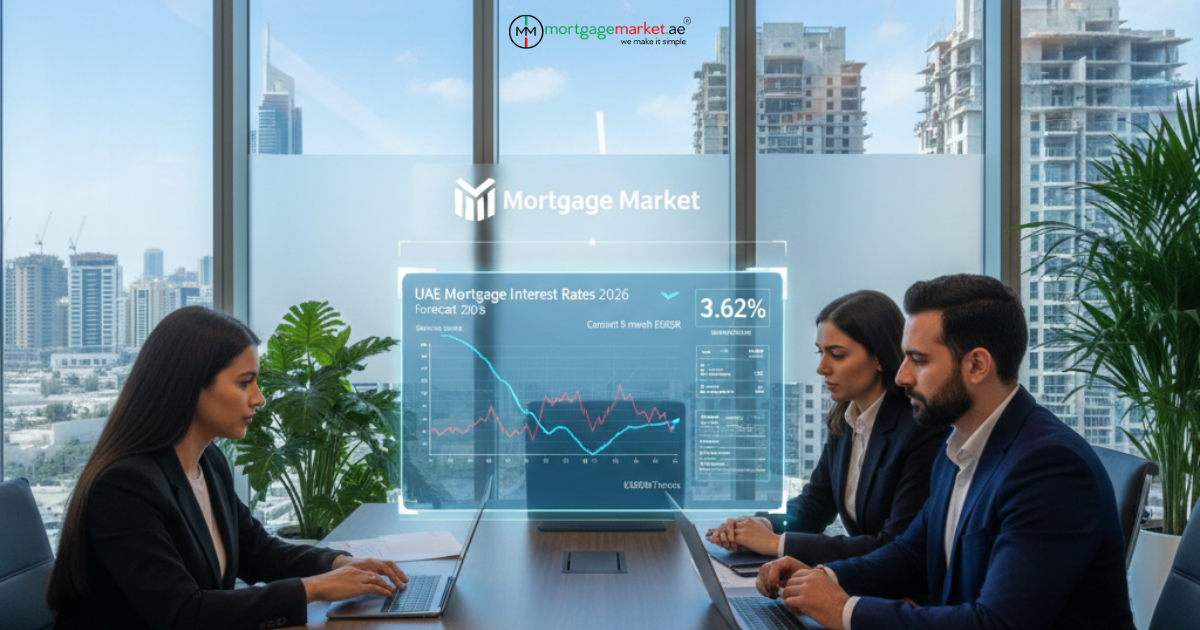
UAE Mortgage Rates 2026: Expert Interest Rate Forecast & EIBOR Trends
Discover the latest UAE mortgage rates in 2026 and how EIBOR.....
Self-Employed in the UAE? 15 Ways to Guarantee Your Mortgage Approval in 2026
Self-employed in the UAE? Getting mortgage approval doesn’t have to be complicated. Discover.....

The main reasons why a mortgage application is rejected
Applying for a mortgage is one of the most significant financial steps in purchasing a.....

EIBOR as on 31 Mar 2026: 1 MONTH: 3.65% | 3 MONTH: 3.66% | 6 MONTH: 3.71% | 1 YEAR: 3.91%