
Self-Employed in the UAE? 15 Ways to Guarantee Your Mortgage Approval in 2026
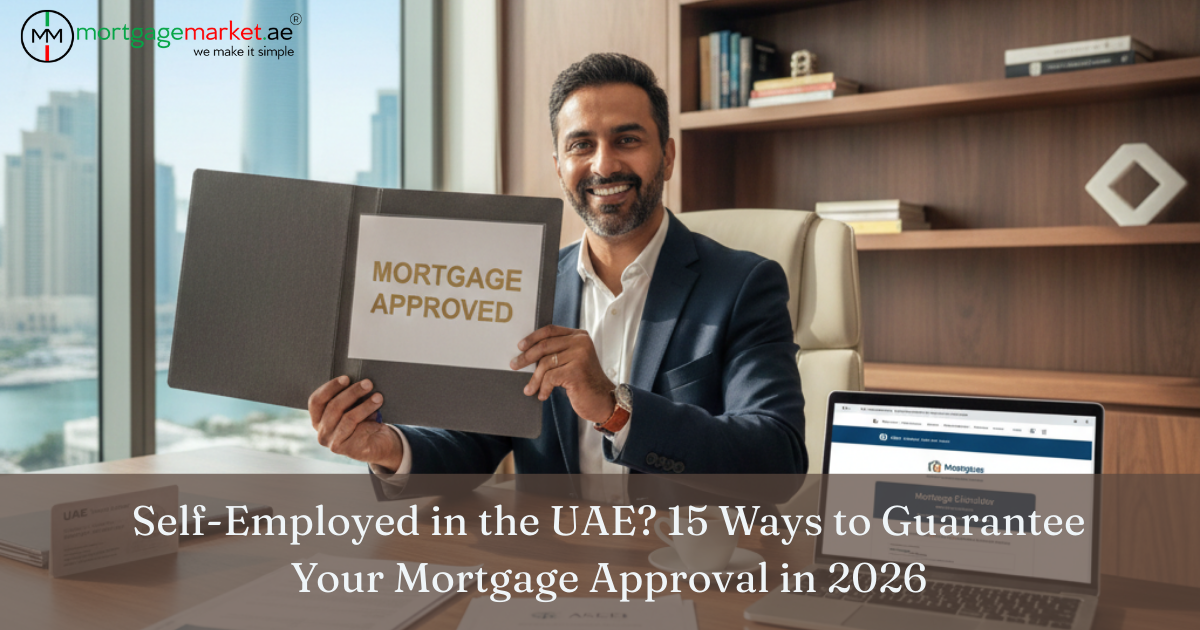
Self-employed in the UAE? Getting mortgage approval doesn’t have to be complicated. Discover 15 proven strategies to strengthen your application, boost your AECB score, manage your finances, and make 2026 the year you finally own your dream home.
For many business owners, freelancers, and entrepreneurs in the UAE, the dream of owning a home can feel out of reach. While salaried employees simply submit a salary certificate, self-employed professionals must prove the stability of their entire income and business operations. This can feel overwhelming—especially when juggling multiple clients, seasonal revenue, or fluctuating cash flow.
The good news? 2026 is a breakthrough year for self-employed mortgages. With more flexible lending policies from top UAE banks, advanced digital banking frameworks, and updated credit assessment tools, securing a mortgage is now a clear and structured process.
At MortgageMarket.ae, we specialize in helping self-employed individuals package their financial profiles for approval. Below are 15 actionable strategies to move from rejection to guaranteed mortgage approval.
1. Separate Your Personal and Business Banking
Banks prefer applicants who demonstrate salary-like behavior, even if they are self-employed. If personal expenses—rent, groceries, Netflix subscriptions—are paid from your corporate account, your finances appear disorganized. This makes it difficult for lenders to assess your actual disposable income and increases the perceived risk of your application.
Actionable Tip: Set up a dedicated personal account and transfer a fixed amount from your business account every month. Do this consistently for at least six months before applying. This not only creates a predictable income flow but also mirrors a salaried employee’s consistent paycheck, making lenders feel more confident in your repayment ability.
Example: If your business generates AED 50,000 monthly, transferring AED 25,000 consistently to your personal account creates a clean, predictable financial pattern that lenders favor.
2. Maintain a Healthy Average Daily Balance (ADB)
Lenders do not evaluate only your month-end balance—they look at your Average Daily Balance (ADB) over the past 6–12 months. Sudden deposits or withdrawals, especially right before applying, can raise red flags, suggesting income irregularities or temporary cash injections.
Actionable Tip: Maintain a consistent balance that reflects financial stability. Avoid large, unexplained deposits and withdrawals in the months leading up to your mortgage application. A healthy ADB demonstrates liquidity, financial responsibility, and operational stability.
Example: If your bank account fluctuates between AED 5,000–50,000, aim to stabilize it around AED 30,000–35,000 consistently to show the bank a smooth cash flow pattern.
3. Ensure Your Trade License Has “Age”
Most UAE banks, including Emirates NBD and ADCB, require a minimum two-year operational history for businesses. This helps lenders evaluate consistency and predict future income. If you’ve recently transitioned from a freelance permit to an LLC or changed business activities, you may need to bridge your business history.
Actionable Tip: Keep your trade license, renewal documents, and business records up-to-date. If your business is less than two years old, consult a specialist mortgage broker to find lenders who accept shorter operational histories or additional proof of income, such as client contracts or invoices.
Example: A freelancer who recently incorporated into an LLC can submit their freelance invoices from the last 24 months alongside the new LLC documents to establish continuity.
4. Master Your Audited Financials
For mortgage applications exceeding AED 1 million, banks typically require two years of audited financial statements. Audits validate your income, expenses, and net profit, providing lenders with a clear view of your business stability.
Actionable Tip: Use a UAE-accredited auditor to ensure your statements are credible. Highlight growth trends, recurring contracts, and stable cash flows. If your business is experiencing post-tax adjustments, clearly explain how profitability remains strong.
Example: A balance sheet showing consistent net profit growth year-on-year reassures lenders that your income is not only stable but also improving.
5. Leverage Your VAT Returns
With the introduction of Corporate Tax in the UAE, VAT returns have become a critical proof of income for self-employed borrowers. Banks now view VAT filings as a government-backed validation of your business turnover.
Actionable Tip: Ensure accurate and timely VAT filings for the past four quarters. Presenting these returns alongside bank statements helps lenders see a reliable, predictable income pattern, similar to a salaried applicant’s monthly paycheck.
Example: A business generating AED 500,000 annually with consistent VAT returns for four quarters shows lenders that income is legitimate and verifiable.
6. Know Your AECB Score (700+ is Ideal)
The Al Etihad Credit Bureau (AECB) score is one of the first things an underwriter reviews. It summarizes your creditworthiness and repayment history across banks, credit cards, and utility bills.
-
700+: High probability of fast-track approval
-
650–699: Moderate risk; may require additional documentation
-
Below 600: High risk of rejection
Actionable Tip: Check your AECB score ahead of time using the AECB app. Pay off any overdue bills, clear outstanding debts, and ensure your utility payments are up to date. A strong AECB score demonstrates responsible financial behavior and significantly improves your chances of mortgage approval.
7. Settle Micro-Debts Early
Even small, unused credit cards or minor loans count toward your Debt Burden Ratio (DBR), which measures your ability to repay new loans. Banks factor in all available credit, not just what you owe.
Actionable Tip: Close unused accounts and pay off micro-debts. Lowering your overall available credit reduces perceived risk, increases your borrowing power, and signals financial discipline.
Example: Closing a dormant credit card with a AED 50,000 limit can effectively improve your DBR, even if the balance is zero.
8. Aim for a Higher Down Payment
While the Central Bank allows an 80% LTV for first-time expats, self-employed applicants often have better approval rates at 70–75% LTV. A higher down payment reduces the bank’s risk and can potentially secure a lower interest rate.
Actionable Tip: Start saving early, and keep the down payment funds in a stable account for several months prior to applying. This demonstrates financial stability and reduces the bank’s perceived risk.
Example: Putting down AED 750,000 on a AED 1 million property creates confidence in your financial commitment and lowers your monthly EMI burden.
9. Show Your Shareholding Clearly
If your business has multiple partners, your mortgage eligibility depends on your share of net profits. Lenders need to know exactly what portion of business income is yours.
Actionable Tip: Ensure your Memorandum of Association (MOA) is up-to-date, clearly stating ownership percentages and profit allocation. Include formal agreements if profit-sharing arrangements exist.
Example: Owning 60% of an LLC with AED 1 million net profit makes only AED 600,000 count toward your mortgage eligibility unless the MOA specifies otherwise.
10. Address the Age Limit
Self-employed borrowers can often extend their mortgage tenure up to age 70, compared to 65 for salaried employees. A longer tenure lowers monthly EMIs and increases the likelihood of approval.
Actionable Tip: Use the maximum tenure strategically to make higher-value properties affordable and to present a strong repayment plan to banks.
Example: A 40-year-old applicant can extend a 30-year mortgage to age 70, reducing monthly EMIs significantly compared to a standard 25-year tenure.
11. Avoid “Window Shopping” Multiple Banks
Multiple hard inquiries on your credit report can signal financial desperation and negatively impact your score.
Actionable Tip: Work with a professional mortgage broker to perform soft eligibility checks before applying. This helps identify the banks most likely to approve your profile without damaging your credit score.
Example: A broker can recommend the bank currently favoring freelancers in the UAE, saving you weeks of unnecessary applications.
12. Use the Joint Application Strategy
Adding a spouse or co-borrower improves the application’s perceived stability and borrowing capacity.
Actionable Tip: Prepare both applicants’ documents—salary certificates, bank statements, and credit histories—to present a unified, stronger profile. Even if the co-borrower earns less, their inclusion can increase the likelihood of approval.
Example: A self-employed applicant with variable income can stabilize their profile by including a salaried spouse from a reputable company.
13. Prepare a Business Profile Narrative
Underwriters are human. A clear story behind your numbers can make a huge difference.
Actionable Tip: Create a one-page business profile that includes your company overview, key clients, recurring contracts, and 2026 growth plans. This personalizes your application and reassures lenders that your business has continuity and stability.
Example: Highlighting long-term contracts with high-profile clients adds credibility to fluctuating monthly revenue.
14. Avoid Career or Industry Switches
Banks prefer consistent income in the same industry for at least 24 months. Recent career changes or industry switches can delay approval.
Actionable Tip: If a change is unavoidable, provide evidence of stable income, recurring contracts, or a detailed business plan demonstrating consistent future earnings.
15. Work With a Specialist Mortgage Broker
Banks’ appetites for specific professions or businesses fluctuate monthly. A mortgage broker knows which banks are “hungry” for your profile.
Actionable Tip: Partner with a broker experienced in self-employed UAE mortgages to save time, reduce stress, and increase your chances of approval. They can also help package your financials in the way lenders prefer.
Quick Eligibility Table (Self-Employed 2026)
|
Requirement |
Standard Criteria |
Pro Tip for Approval |
|
Trade License Age |
2 Years Minimum |
Keep renewals updated early |
|
Bank Statements |
6–12 Months |
Avoid large cash withdrawals |
|
Min. Monthly Income |
AED 20,000–25,000 |
Can be drawn as a director salary |
|
AECB Score |
680+ |
Pay Etisalat/DEWA bills on time |
Stop Guessing, Start Owning
Being self-employed in the UAE doesn’t mean you can’t own a home. With proper planning, consistent documentation, and guidance from experts, mortgage approval is achievable in 2026.
Use a mortgage eligibility calculator to see where you stand today and take the first step toward building equity and owning your dream home.
Frequently Asked Questions (FAQs)
1. Can self-employed individuals get a mortgage in the UAE?
Yes. Self-employed professionals, freelancers, and business owners can get approved for mortgages in the UAE. Banks require proof of consistent income, proper documentation, and a strong AECB credit score. With careful preparation, mortgage approval is achievable.
2. How long should my business be operational to qualify?
Most UAE banks require a minimum of 2 years of business activity. However, if your business is newer, providing audited financial statements, VAT returns, and contracts can strengthen your application.
3. What documents do self-employed applicants need?
Typically, banks ask for:
-
6–12 months of bank statements
-
Trade license and renewal documents
-
Audited financial statements (if applicable)
-
VAT returns for the last four quarters
-
AECB credit score
-
MOA showing shareholding, if applicable
4. What is the ideal AECB score for mortgage approval?
A score of 700 or above is considered ideal for fast-track mortgage approval. Scores between 650–699 may require extra documentation, while scores below 600 carry a higher risk of rejection.
5. Can I use a joint application to improve approval chances?
Yes. Adding a spouse or co-borrower with a stable salary improves perceived income stability and strengthens your application. This is especially helpful for variable-income self-employed applicants.
6. How much down payment do self-employed applicants need?
While the UAE Central Bank allows up to 80% LTV for first-time buyers, self-employed applicants often find higher approval rates with 70–75% LTV. A higher down payment reduces bank risk and may secure better interest rates.
7. Can recent career or industry changes affect approval?
Yes. Banks generally require 24 months of consistent income in the same industry. Switching industries or careers may delay approval unless you can demonstrate stable earnings or long-term contracts.
8. Do VAT returns replace a salary certificate?
Yes. For self-employed applicants, consistent VAT filings over four quarters act as a government-backed proof of income, similar to a salary certificate for salaried employees.
9. How can I improve my chances as a self-employed applicant?
Key strategies include:
-
Separating personal and business accounts
-
Maintaining a healthy Average Daily Balance (ADB)
-
Paying off micro-debts and closing unused credit cards
-
Preparing a clear business profile narrative
-
Working with a specialist mortgage broker
10. Is working with a mortgage broker necessary for self-employed borrowers?
While not mandatory, a specialist mortgage broker can significantly improve approval chances. Brokers know which banks favor self-employed applicants and can help package your documentation effectively.

How to Get a Home Loan in Dubai, Step by Step
Planning to get a home loan in Dubai? Discover the complete step-by-step journey—from checking your.....


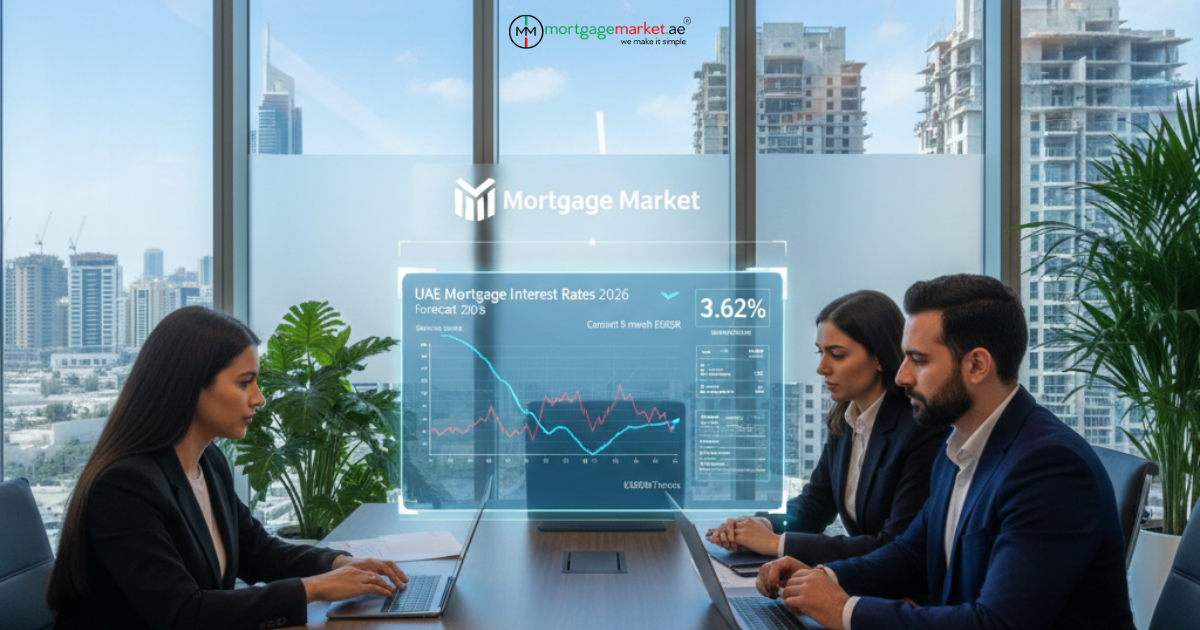
UAE Mortgage Rates 2026: Expert Interest Rate Forecast & EIBOR Trends
Discover the latest UAE mortgage rates in 2026 and how EIBOR.....

The main reasons why a mortgage application is rejected
Applying for a mortgage is one of the most significant financial steps in purchasing a.....

Top tips on how to secure a mortgage in Dubai for expats
Securing a mortgage in Dubai as an expat can feel like navigating a maze—thrilling but.....

EIBOR as on 31 Mar 2026: 1 MONTH: 3.65% | 3 MONTH: 3.66% | 6 MONTH: 3.71% | 1 YEAR: 3.91%